
Your Attic Experts.
categories
SHARE
With all of the benefits of home ownership, there are also challenges that arise from time to time. To be sure, mould remediation is not one of the maintenance challenges that homeowners could imagine. But in a typical residential attic, mould infiltrations are not an uncommon occurrence.
Naturally, the best approach in the attic is to keep the space well maintained and completely free of mould. At the same time, there are certain conditions that will promote mould growth and might well require mould remediation. That’s when professional attention is necessary and required.
In most cases, attic mould will grow when two conditions are at play – a high level of air moisture and a poorly ventilated attic cavity. While certain signs and symptoms may be apparent, it’s only with a professional inspection that one can determine the source and scope of a mould infiltration.
Black mould is sometimes referred to as “black toxic mould” even though the “toxic” label is not an accurate description. It’s true that black mould is often associated with allergy-like symptoms, but it’s an exaggeration to consider this mould as “toxic”.
For the most part, black mould causes indoor air to be compromised. Occupants may be prone to skin irritation, eye irritation, sinus congestion, and respiratory issues. And in worst cases, more severe symptoms can affect the very young and old.
There is no doubt that black mould (and airborne spores) affect people with immune sensitivities. Naturally, these individuals would be more susceptible to additional infections. However, black mould does not require occupant to leave the home.
White mould is another common occurrence in the attic. Because of its colour, it can be confused with “efflorescence”, which is simply a build-up of salt from a water source. “Efflorescence” does resemble white mould but tends to stick to concrete or masonry surfaces (unlike mould).
White mould will be visible on wood or drywall surfaces because these are feeding sources for the mould. Very much like black mould, white mould is also associated with health issues like skin and eye irritation, respiratory difficulties, sinus complications and general allergy symptoms.
Whatever the scope of infiltration, white mould should be removed professionally. It may not have terrible adverse effects, but the risks to health and structure aren’t worth it. More importantly, mould remediation should not become a DIY project – this is work that requires expertise.
Whatever the type of attic mould, professional mould remediation is the solution. In Toronto and throughout the GTA, EcoComfort provides safe and effective mould remediation by technicians who are trained and experienced.
EcoComfort mould specialists know where to find mould; know how to recognize species; and know how to professionally remediate. The main objective is to eliminate the source of mould and avert the potential for future infiltration.
In Toronto, EcoComfort Insulation and Contracting offers a wide range of attic services. Find out more by calling 416-333-4554 or fill out our convenient online form.

Book an Attic Inspection Today by Calling 416-333-4554.
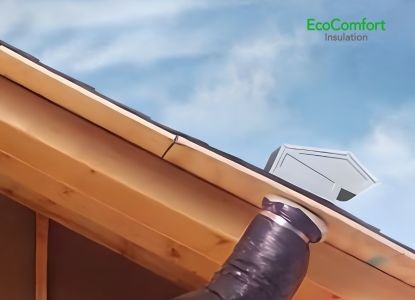
What Is the Best Way to Vent Your Attic
The best way to vent your attic is to create balanced airflow, with intake vents bringing outdoor air into the lower part of the roof and exhaust vents allowing warm, humid air to leave higher up. The...
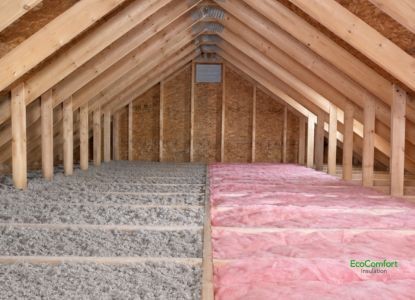
Cellulose vs. Batt Insulation: Which Is Better for a Toronto Attic?
When homeowners compare cellulose attic insulation Toronto install against traditional batt insulation, cellulose is usually the stronger fit for older homes or irregular attics, since it's blown...
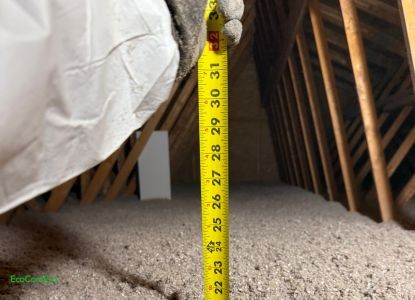
Benefits of No Audit Energy Rebate for Attic Insulation
Upgrading attic insulation with regional rebate programs is often assumed to require an energy audit first. Still, the Home Renovations Savings Rebate, an Ontario rebate program available to Enbridge...