
Your Attic Experts.
categories
SHARE
When choosing an insulation product, one of the qualities you should take into consideration is the longevity, because, just as with any improvement you make to your home, you want to choose the best solution for your time and money. One option we frequently recommend to our customers is blown in insulation. Because it lasts well over time, it’s an excellent option for homes big and small.
If this insulation type lasts so well, why are there so many options on the market? Why are there so many confusing choices, materials, and installation methods? How long does it REALLY last?
Today, we’re going to give you a primer on this type of insulation and why we think it may be a great option for your home.
There are two popular types of blown in insulation on the market today, made out of one of two materials: cellulose and fibreglass. Cellulose is a material that’s been on the market for decades and has received a lot of attention for being a greener option when it comes to home insulation.
This type of insulation is a mix of recycled paper products, such as newspapers, that is treated with a naturally occurring chemical (borate) to be fire and pest resistant. Unlike blown in fibreglass insulation, which has a high embodied energy (the energy needed to create it), blown in cellulose is easier to produce and diverts materials otherwise destined for the landfill.
If you’re considering adding new insulation anywhere in your home this season, blown in cellulose insulation lasts and is a great option if you need a bit of flexibility. The key to its versatility is in the name - unlike other insulation types that come in batt form, cellulose is blown in. It comes from the manufacturer in small pieces that are simply blown in to place. That makes it an excellent option for walls, small attics, or other spaces where traditional insulations would be much more expensive or labour intensive to install.
This insulation option can be installed in new or old structures and on top of existing insulation too. When spaces are under insulated, this insulation type can simply top up existing materials and add increased R Values and longevity to your home.
This insulation type also adds an advantage when it comes to time and labour - while doing it right takes skill, it can be installed by small teams and with minimal disruption to your home and life. This is a huge difference from the old days, when huge teams would need a week or more to install your insulation and cause significant disruption to your life. With this insulation option, a day or two is all we usually need to perform a high-quality installation.
Installing new insulation anywhere in your home has a great number of advantages:
How long blown in cellulose insulation lasts is the 60 million dollar question. All types of insulation degrade over time, and insulation eventually loses its ability to help regulate the temperature of your home and must be replaced.
How long it lasts is thus dependent on a number of different factors, such as:
Generally, when answering the question of how well this kind of insulation lasts, estimates will vary depending on the age of your home, but the International Association of Certified Home Inspectors states that this insulation could last up to 100 years!
Adding new insulation to your home is a smart home improvement that can be done all year round - insulation helps you keep your home comfortable in every season. When thinking about insulating, keep in mind these 3 important things:
When do you know it’s time to upgrade your home’s insulation? While the best way to tell lies with having a professional assessment, there are a couple of conspicuous signs that your insulation needs to be topped up or replaced.
This one is the most obvious sign of all. An under insulated attic or home usually means that the hot or cold air your HVAC equipment is producing is escaping from the rooms you want it in and leaking outdoors. This isn’t just inefficient, it’s a huge waste of your money!
If you live in an older home or haven’t paid attention to your insulation in the last 15-20 years, it’s probably a good time to have a look at it, since it’s likely no longer to code and could be inefficient.
When there are big temperature changes indoors, hot and cold spots, or breezes, this usually signifies a lack of insulation or insufficient protection.
Water is one of the worst problems a home can have, since it can lead to dozens of problems with mould and structural damage.
A lack of insulation is usually accompanied by an increase in HVAC maintenance - the more you need to run your furnace, the greater the wear and tear, and the shorter its lifespan.
This kind of insulation is one of our top choices for homes across the GTA for a number of reasons.
Firstly, it is safe. In controlled fire testing, cellulose insulation failed 25 minutes after other control subjects did - and in the event of a house fire, 25 minutes is valuable time to get your family to safety.
Another reason as to why we love it is because it’s an environmentally friendly product. It’s made with no harmful chemicals and contains up to 85% recycled paper. Instead of sending that material to the landfill, it’s cleaned and treated with a boric acid solution (a mild, home-safe acid) to repel insects, and then can last up to 100 years in your attic - wow!
Lastly, it is quick and clean to install - we know how busy modern families are and that you probably already have a lot on your plate, and cellulose can often be installed in a day or less.
Settlement is a huge concern for homeowners researching blown in insulation, and is one of the most important reasons you should work with a professional to install your new product. After installation, insulation can settle and compress, which reduces its efficacy and can reduce your coverage.
Blown in cellulose insulation can settle as much as 20%. EcoComfort counteracts this by dense packing insulation - by adding approximately 20% more and compressing it during installation. This allows the insulation to settle upwards instead of down, expanding to fit the space. This method can actually offer superior R Values and takes no extra time or equipment.
Something you’re likely to come across when researching home insulation is a vapor barrier. This can be a permeable or impermeable barrier designed to let moisture exit the home or to block it entirely, and we often come across confusion as to whether or not insulation needs a vapor barrier.
The answer we give at EcoComfort is no - because cellulose insulation is the only insulation product that actually manages moisture on its own. It acts as an air barrier, and since most moisture inside homes is carried in the air, this barrier helps to manage indoor moisture levels - cellulose also has the ability to wick moisture and let it diffuse over the entire surface area. In this situation, a vapor barrier can actually cause trouble, since it can trap moisture without allowing it to diffuse, leading to soggy, ineffective insulation.
One of the reasons that this insulation type is our top choice here at EcoComfort Insulation is that it’s extremely flexible. One way that we commonly help homeowners looking to increase their R Values is by installing insulation over existing insulation.
If you live in a newer home or have replaced your insulation in the last two decades, as long as there’s been no leaks or problems, it’s likely that your insulation is in decent shape. But it’s also likely no longer up to code or there’s too little installed. This is where cellulose can make a huge difference to your home’s indoor comfort and energy efficiency. If your existing insulation is in good shape, a layer of new insulation can be installed directly over top in only a few hours, bringing your home up to code and keeping you comfortable all year long.
The answer to this question is an unequivocal YES! While it’s not a home renovation that you may see on a daily basis, you experience its benefits all year round in a number of significant ways.
If those answers don’t convince you, let us give you one more. When it comes to insulating the attic, the majority of projects that EcoComfort works on take less than a day. For an average attic space, our teams of 2-5 people provide quick, clean, and polite service that doesn’t disrupt your day or home. We know you’re busy, which is why we pride ourselves on our thorough, reliable services, making attic insulation a win-win in all the ways that it counts.
Installing insulation correctly can have a huge effect on how well it works, as well as the longevity of your product. While installing blown in cellulose insulation is simple on paper, the complexities and unique ecology of your home need to be taken into consideration for the best outcome. That’s why it’s important to work with a professional team like EcoComfort. Not only do our technicians have years of on the job experience installing insulation, but they’ll ensure that our products are installed right, even if that means suggesting improvements that slow down our work.
Having a safe and well installed product is predicated on having a thorough removal of old attic insulation, which we do as well - from removing old insulation to patching holes and assessing your interior and exterior structures, - the EcoComfort team can do it all from start to finish, resulting in a thorough and long lasting installation.
For EcoComfort, a good insulation installation also means that you have all your questions answered and that you feel confident in making the right decisions for your home. If you have any concerns or need further information about our products or services, get in touch! How well blown in cellulose insulation lasts is dependent on many factors, so if it’s something you’re interested in pursuing, we’re happy to help you navigate the world of home insulation.
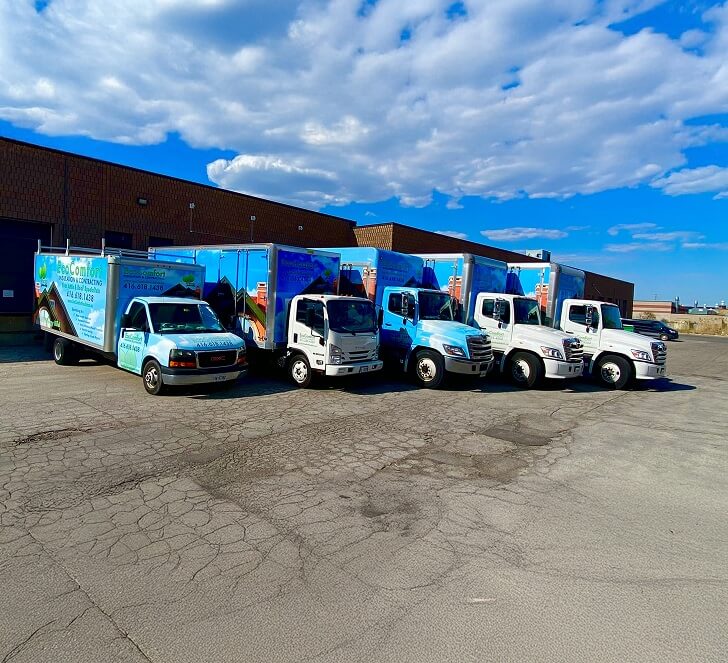
Book an Attic Inspection Today by Calling 416-333-4554.
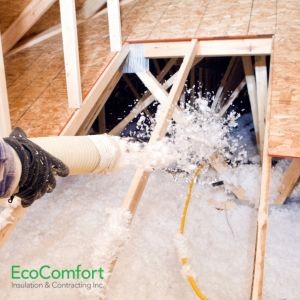
Why Improve the Air Tightness of Your Attic
When addressing issues like drafts and rising energy bills, many homeowners may not realize how much their attic can impact their entire home’s comfort and efficiency. Poor attic ventilation and...
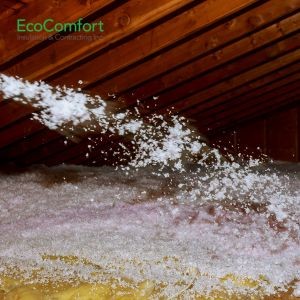
Signs Your Attic Insulation Has Settled
When attic insulation settles and flattens, its performance starts to decline pretty quickly. As a result, you may experience challenges and signs when inside your home. Under-performing or damaged...
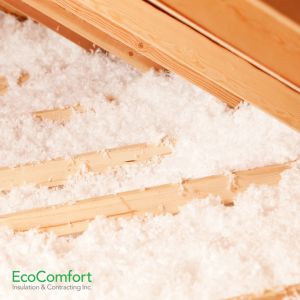
Why Blown In Cellulsoe is a Safer Attic Insulation Choice
Blown-in cellulose insulation is not the only choice for attics in Mississauga and Southern Ontario. Still, it is among the most popular of the options due to a number of reasons. When you need a...