
Your Attic Experts.
categories
SHARE
The best way to vent your attic is to create balanced airflow, with intake vents bringing outdoor air into the lower part of the roof and exhaust vents allowing warm, humid air to leave higher up. The correct attic vent installation depends on the roof design, existing openings, moisture conditions, and whether attic insulation is obstructing airflow near the eaves. Adding a vent without assessing the entire system may not correct the underlying issue.
At EcoComfort Insulation & Contracting, we begin with an attic inspection before recommending ventilation upgrades. As an insulation contractor, we assess how air enters, travels through and exits the roof cavity. This allows us to plan attic ventilation in Toronto around the conditions of the home instead of assuming that one vent type will work for every roof.
Effective ventilation is a continuous system. Soffit or eave vents provide intake by allowing outdoor air to enter near the bottom of the roof. Exhaust vents, which may include ridge, low-profile, turbine, gable, solar or powered options, release rising heat and moisture from higher points.
The intake and exhaust components must work together. Exhaust openings cannot move air effectively when there is not enough intake, and intake vents cannot perform properly when the air has no clear route out. Simply adding a powerful exhaust vent is not always the answer. The roof design and existing vent locations need to be evaluated as a complete system.
Rafter vents, which are also called baffles, preserve an airflow channel between the soffit and the roof cavity. They help prevent loose-fill material or other debris from covering the intake openings at the eaves.
Without a clear channel, the home may appear to have soffit vents from the exterior while airflow is restricted inside the attic. Rafter vents guide incoming air above the insulation so it can continue toward the exhaust points. They are therefore an important part of many balanced ventilation plans, particularly when the insulation reaches the edges of the attic floor.
Good attic insulation slows heat transfer between the living space and the roof cavity. Ventilation manages heat and moisture within that cavity by supporting a controlled movement of air. One does not replace the other.
If the insulation is thin or uneven, improving ventilation alone will not correct heat loss through the ceiling. If airflow is blocked or insufficient, adding more insulation without correcting that problem may leave heat and moisture trapped. Reviewing both systems together helps identify whether the home needs venting improvements, an insulation upgrade or a combination of services.
There is no single vent style that is best for every home. Ridge vents can provide exhaust along the peak when the roof design supports them. Low-profile vents use natural convection and are generally positioned near the ridge. Gable vents move air through the ends of certain roof designs, while turbine, solar and powered vents use different methods to help remove warm air and moisture.
The correct choice depends on the roof shape, available soffit intake, attic size, existing vents and the source of any heat or moisture concerns. Mixing vent types without understanding how they interact can create uneven airflow. A professional assessment is more useful than choosing a product based only on its appearance or advertised power.
An attic may need attention when condensation, excess humidity, mould, water staining or ice damming appears. Uneven indoor temperatures and unusually high heating or cooling demands can also justify an inspection, although these symptoms may have more than one cause.
Because attic spaces can contain electrical wiring, mould, pests and unstable walking surfaces, homeowners should not rely on a quick visual check from the hatch to diagnose the problem. Working with an insulation contractor provides a clearer assessment of the vents, airflow pathways, insulation condition and other factors affecting the roof cavity.
A professional attic vent installation should begin with a review of the complete attic and roof system. The inspection can confirm whether soffit openings are functional, whether rafter vents are present and clear, where exhaust vents are located and whether moisture or insulation problems are interfering with performance.
For reliable attic ventilation in Toronto, contact EcoComfort to arrange an attic inspection. We can identify where airflow is restricted and recommend venting and insulation improvements based on the actual conditions of your home.

Book an Attic Inspection Today by Calling 416-333-4554.
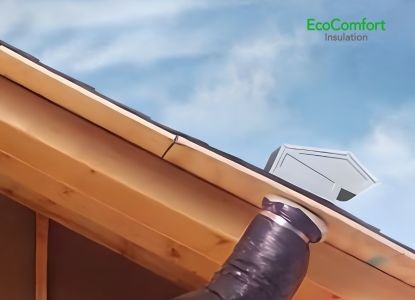
What Is the Best Way to Vent Your Attic
The best way to vent your attic is to create balanced airflow, with intake vents bringing outdoor air into the lower part of the roof and exhaust vents allowing warm, humid air to leave higher up. The...
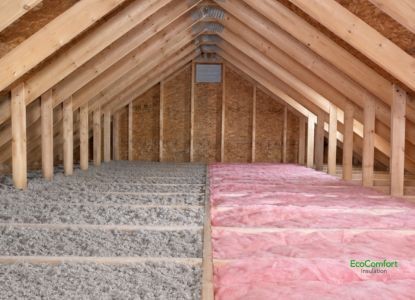
Cellulose vs. Batt Insulation: Which Is Better for a Toronto Attic?
When homeowners compare cellulose attic insulation Toronto install against traditional batt insulation, cellulose is usually the stronger fit for older homes or irregular attics, since it's blown...
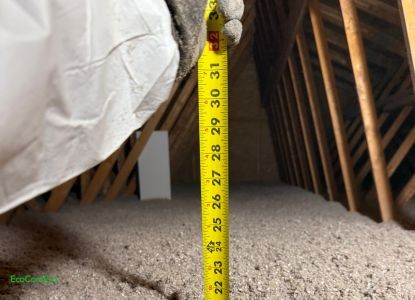
Benefits of No Audit Energy Rebate for Attic Insulation
Upgrading attic insulation with regional rebate programs is often assumed to require an energy audit first. Still, the Home Renovations Savings Rebate, an Ontario rebate program available to Enbridge...