
Your Attic Experts.
categories
SHARE
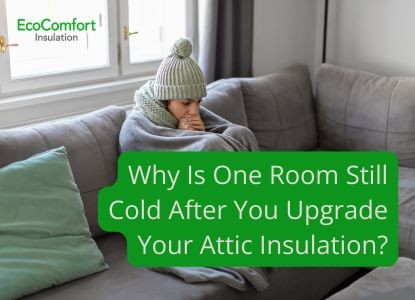
If one room stays cold after an attic insulation upgrade, the insulation itself may not be the problem. That room could have air leaks, poor duct airflow, an under-insulated section, or exterior walls and windows that lose more heat than the rest of the home. Before assuming the work was unsuccessful or questioning the cost of your attic insulation in Toronto, it helps to determine whether the temperature difference is coming from above the room or somewhere else entirely.
A useful clue is whether the room was always colder or only became noticeably uncomfortable recently. If you're noticing issues with your indoor temperatures, contact EcoComfort to book an attic inspection near you.
Where the room sits in the house can reveal a lot.
A bedroom over a garage, for example, has more surfaces exposed to unheated space than a bedroom surrounded by other conditioned rooms. A corner room has two exterior walls. A room with large windows may lose more heat than a smaller interior room even when both have the same amount of attic insulation above them.
Top-floor rooms can also be affected by uneven insulation coverage. If insulation is compressed, displaced, or missing near an attic hatch, soffit, or difficult-to-access section, one area may perform differently from the rest of the attic.
A cold room and a drafty room are not necessarily the same thing.
On a cold or windy day, check around accessible window and door frames for noticeable drafts. Exterior wall penetrations and electrical outlets can also be areas where air leakage occurs.
In the attic, air can leak through gaps around wiring, plumbing penetrations, light fixtures, and other openings between the living space and attic. Adding insulation without addressing significant air leakage can limit the improvement you feel below.
This is why an insulation upgrade should be considered as part of the home's overall thermal envelope rather than simply a deeper layer of material.
If the room has adequate insulation but still does not warm up with the rest of the house, pay attention to airflow.
Is the supply register open? Does noticeably less warm air come from it than from vents in nearby rooms? Is furniture or a rug blocking a return vent?
Uneven heating can sometimes point to ductwork, balancing, or HVAC issues rather than the attic.
This distinction matters because adding more insulation will not correct a room that is receiving inadequate heated air.
Instead of comparing insulation alone, compare the cold room with a comfortable room nearby.
Consider:
That comparison can help narrow down where the heat is being lost.
Our related guide on signs that your attic insulation needs an upgrade also explains some of the broader warning signs homeowners can watch for.
If the temperature problem remains concentrated on the upper floor, an attic assessment can help determine whether insulation depth and coverage are consistent and whether obvious air leakage or ventilation issues are present.
The goal should not be to keep adding insulation until the room feels warmer. More material only helps when inadequate insulation is actually contributing to the problem.
Understanding that distinction also puts attic insulation cost into better perspective. The value of an upgrade depends on correcting the conditions that are allowing heat to escape, not simply reaching the greatest possible insulation depth.
At EcoComfort Insulators, we assess the attic as a system so homeowners can determine whether a persistent cold room is related to insulation or whether another part of the home deserves closer attention.

Book an Attic Inspection Today by Calling 416-333-4554.
Why Is One Room Still Cold After You Upgrade Your Attic Insulation?
If one room stays cold after an attic insulation upgrade, the insulation itself may not be the problem. That room could have air leaks, poor duct airflow, an under-insulated section, or exterior walls...
Why Does Attic Insulation Get Wet and What Should You Do About It?
Wet attic insulation usually means moisture is entering the attic from a roof leak, condensation, indoor air leakage, or improperly vented exhaust. The first priority is finding that source rather...
What Is the Best Way to Vent Your Attic
The best way to vent your attic is to create balanced airflow, with intake vents bringing outdoor air into the lower part of the roof and exhaust vents allowing warm, humid air to leave higher up. The...