
Your Attic Experts.
categories
SHARE
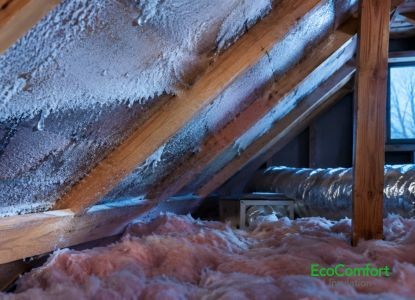
Frost on the underside of your roof is a warning sign that excess moisture is accumulating inside your attic. While improving attic ventilation and installing rafter vents can help address airflow deficiencies, identifying where the moisture originates is equally important. At EcoComfort, we recommend a professional attic inspection whenever homeowners discover frost on roof sheathing, rafters, or roofing nails. Early intervention can help prevent insulation damage, wood deterioration, and the eventual need for attic mould remediation.
During the winter, everyday household activities such as showering, cooking, and doing laundry introduce moisture into your indoor environment. Warm, moisture-laden air can escape into the attic through gaps around plumbing penetrations, recessed lighting, electrical wiring, and attic hatches.
When this air encounters cold roof sheathing, moisture can condense on the surface. If the surface temperature is below freezing, that moisture can accumulate as frost.
Although your attic is expected to be cold during the winter, significant or recurring frost accumulation should not be considered normal. It often indicates that moisture is entering the attic faster than it can escape.
Bathroom exhaust ducts that terminate inside the attic, inadequate air sealing, and obstructed ventilation pathways can all contribute to this problem.
Frost can accumulate gradually throughout periods of cold weather without homeowners noticing any changes inside their living spaces.
When outdoor temperatures rise, however, accumulated frost begins to melt. Water can drip from roofing nails and roof sheathing onto the insulation below, creating conditions that resemble a roof leak even when the exterior roofing materials remain intact.
Repeated condensation and thawing can contribute to:
Homeowners who notice ceiling stains during winter thaws, particularly without significant rainfall, should have their attic assessed to determine whether condensation is responsible.
Effective attic ventilation relies on unobstructed airflow between intake and exhaust vents. In many residential attics, fresh outdoor air enters through soffit vents and exits through roof-level vents.
However, insufficient clearance between insulation and the underside of the roof can restrict this airflow. Older insulation installations may also have inadvertently covered soffit openings.
By installing rafter vents, also known as attic baffles, our team helps establish dedicated airflow channels between the insulation and roof sheathing. These channels protect soffit ventilation while allowing insulation to extend towards the perimeter of the attic.
Rafter vents are particularly important when upgrading to blown-in cellulose insulation because they help prevent loose-fill materials from obstructing ventilation pathways.
Ventilation improvements must also be supported by appropriate air sealing. Increasing airflow alone may not resolve condensation if substantial amounts of warm, humid household air continue entering the attic.
Freezing temperatures can temporarily slow mould growth, but the underlying moisture problem does not disappear.
As accumulated frost melts and temperatures become more favourable for growth, damp roof sheathing and surrounding materials may support mould colonization.
If contamination has already developed, professional attic mould remediation may be necessary before insulation upgrades proceed. Correcting the original moisture source is essential to reducing the likelihood of recurring growth.
At EcoComfort, we assess your attic as a complete system rather than treating insulation, ventilation, and moisture problems independently.
During an attic inspection, our specialists examine insulation coverage, ventilation pathways, visible moisture damage, and potential sources of air leakage. Based on our findings, we can recommend appropriate air sealing, ventilation upgrades, remediation, or insulation replacement.
Our family-owned company has insulated more than 30,000 attics across Toronto, Mississauga, Vaughan, Oakville, Markham, Burlington, and the Greater Toronto Area since 2010.
Book your complimentary attic assessment with EcoComfort to address winter moisture problems before they become costly repairs.

Book an Attic Inspection Today by Calling 416-333-4554.
Why Frost in Your Attic Is a Sign of Trouble
Frost on the underside of your roof is a warning sign that excess moisture is accumulating inside your attic. While improving attic ventilation and installing rafter vents can help address airflow...
How Often Should You Check on Your Attic Insulation?
Homeowners should check for signs of attic insulation problems at least once a year and arrange a professional assessment whenever changes in indoor comfort, energy consumption, or moisture conditions...
Does Mould in Your Attic Mean Poor Air Quality?
Mould in your attic does not automatically mean that the air throughout your home is contaminated, but it can contribute to indoor air quality concerns when air moves between the attic and living...