
Your Attic Experts.
categories
SHARE
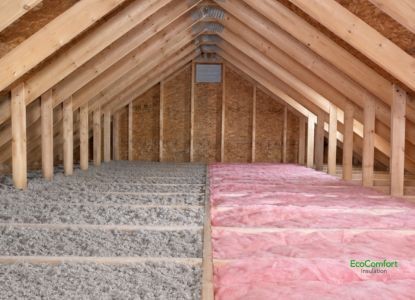
When homeowners compare cellulose attic insulation Toronto install against traditional batt insulation, cellulose is usually the stronger fit for older homes or irregular attics, since it's blown in as loose fill and settles into gaps rigid batts leave exposed. The right choice comes down to your shape and how airtight your attic is already. At EcoComfort, our trusted attic insulation services focus on blown-in cellulose insulation for strategic installation, optimal coverage, and enhanced R-value and energy efficiency.
Loose-fill cellulose conforms around wiring, framing, and obstructions, closing small gaps where batts often leave air pockets. Those gaps are easy to miss during a quick visual check, but they're exactly where heat tends to escape in winter and enter in summer.
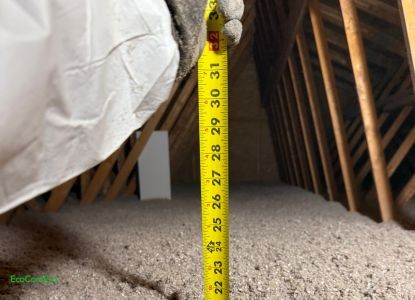
Cellulose settles slightly after installation, which installers account for in the fill depth by adding extra material upfront. Batts hold their shape but can sag or gap if cut or compressed incorrectly around obstructions, which is a common issue in attics with a lot of framing or wiring to work around.
Both materials need a dry attic to perform. An evenly distributed loose-fill product can make uneven moisture patterns easier to spot during a follow-up inspection, since a change in how the material settles or compresses in one area can be a visible clue that something's worth a closer look. Batt insulation can hide the same kind of moisture issue underneath an intact-looking surface, which is worth keeping in mind if a leak or condensation problem develops later.
Cellulose is treated with a fire retardant during manufacturing, a step batt products don't share. This is one of the more concrete material differences between the two options, rather than a matter of installation preference.
Blown-in insulation Toronto crews typically complete in a few hours with minimal mess, while batt installation requires precise cutting around every joist and obstruction. For attics with a lot of framing detail, that difference in installation approach can also affect how evenly the final coverage turns out.
Material and labour vary by attic size, so an in-person assessment gives the most accurate comparison for your specific home. Many cellulose upgrades also qualify for the Home Renovations Savings Rebate, an Ontario rebate program available to Enbridge Gas customers and Ontario-grid-connected homeowners that EcoComfort participates in as a contractor. No energy audit is required, and attics starting at R-12 or below are eligible for up to $1,250 back. See the rebate page for full eligibility and how to apply.
Attics with recessed lighting, lots of wiring, or irregular framing tend to benefit most from a loose-fill product that reaches every space without hand-cut panels. A straightforward, unobstructed attic is a case where either material can perform well, which is part of why an in-person look at your specific attic matters more than a blanket recommendation. Older Toronto homes, in particular, tend to have more of the irregular framing and obstructions that favour a loose-fill approach.
See why blown-in cellulose insulation is a safer attic insulation choice for a closer look at the material itself, or reach out to our insulation contractors in Toronto for an assessment of which option fits your attic.
Book an Attic Inspection Today by Calling 416-333-4554.
Cellulose vs. Batt Insulation: Which Is Better for a Toronto Attic?
When homeowners compare cellulose attic insulation Toronto install against traditional batt insulation, cellulose is usually the stronger fit for older homes or irregular attics, since it's blown...
Benefits of No Audit Energy Rebate for Attic Insulation
Upgrading attic insulation with regional rebate programs is often assumed to require an energy audit first. Still, the Home Renovations Savings Rebate, an Ontario rebate program available to Enbridge...

Signs Your Bathroom Exhausts Are Venting to Your Attic
Bathroom exhaust fans are supposed to move warm, humid air outdoors, not into your attic. When bathroom air is vented into the attic, moisture can collect on roof sheathing, ducts, rafters, and attic...